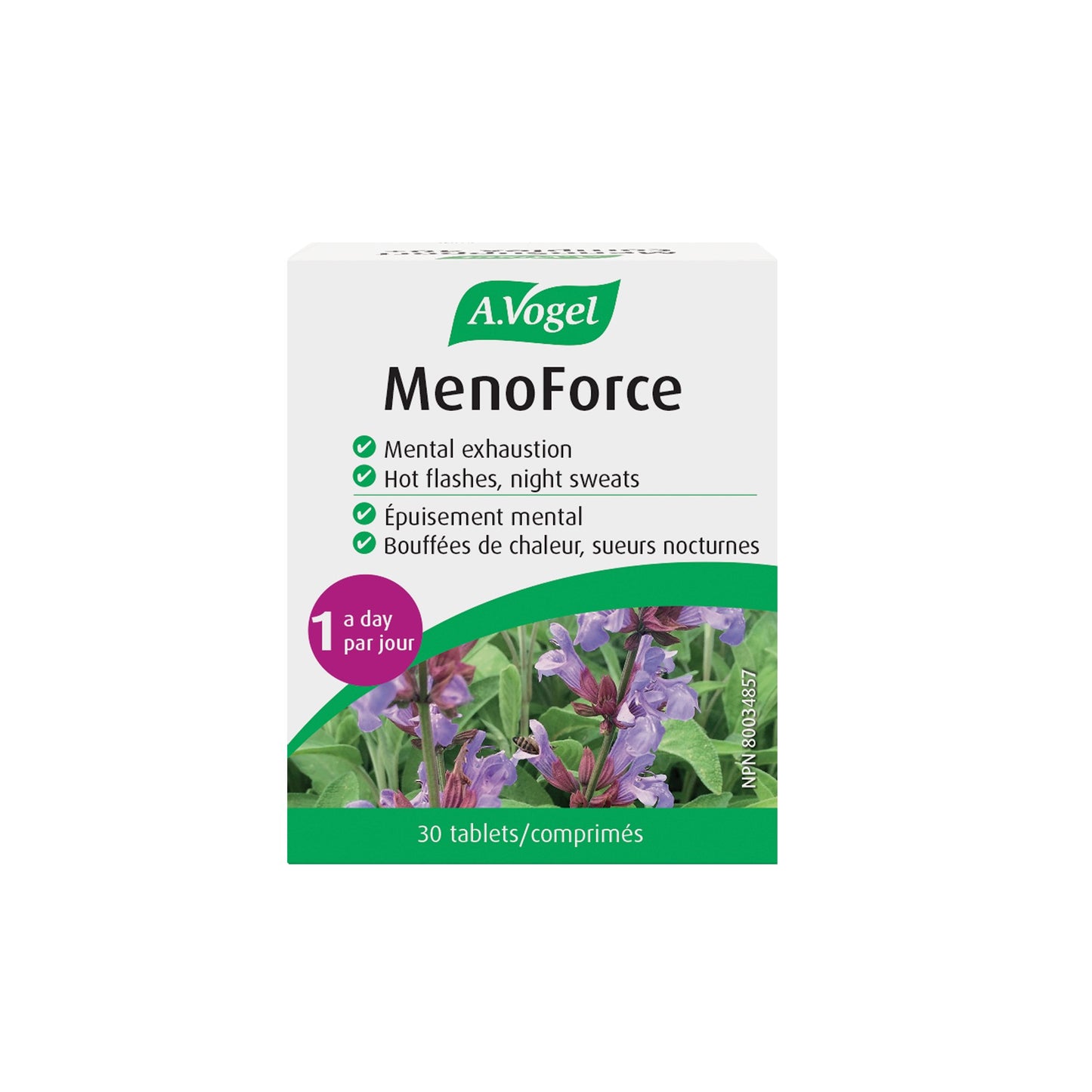
Clinical Research Sage  (Salvia officinalis)

Modulation of neurological pathways by Salvia officinalis and its dependence on manufacturing process and plant parts used

Carsten Tober and Roland Schoop

BMC Complementary and Alternative Medicine 2019 

Abstract
Background: Salvia officinalis has been used successfully for the treatment of hot flushes and excessive sweating during menopause. However, modes of actions have not been elucidated conclusively. We explored its pharmacology beyond any hormonal activity with a focus on neurologic impulse transmission.
Methods: Ahydroalcoholic, thujone-free extract from freshly harvested Salvia officinalis leaves (A.Vogel Menosan®) was investigated in an acetylcholinesterase enzyme assay and several receptor binding assays (adrenergic alpha 2A, GABA (benzodiazepine site), GABAB; muscarinic M3, μ-opioid, serotonin 5-HT1A, serotonin 5-HT2B, serotonin 5-HT2C and serotonin transporter).
The influence of the manufacturing process on additional extracts from different fresh or dry plant parts was studied.
Results: The Salvia officinalis extract replaced 50% of specific ligand binding to GABAA and GABAB receptors at an inhibitory concentration (IC50) of 89 and 229 μg/ml, respectively.
Strong binding affinity was observed for the adrenergic α2A receptor, μ-opioid receptors, muscarinic M3 receptors, and serotonin 5-HT1A receptors, with IC50 values of 15 μg/ml, 20 μg/ml, 25 μg/ml and 19 μg/ml, respectively.
Moderate interference with 5-HT2B, 5-HT2C receptors, and the human serotonin transporter was found, all with IC50 values above 32 μg/ml.
Receptor binding data of Salvia extract were confirmed in native female hypothalamic tissue from two women (51 and 37 years old). Use of freshly harvested Salvia leaves resulted in 2- to 4-fold higher activity/lower IC50 values compared to extracts from dried plants or stipes.
Conclusion: Our results suggest potent modulation of neuro-receptors and of serotonin transporters as mode of action for Salvia officinalis alcoholic extract, which may normalize thermoregulation and possibly also mental impairment during menopause.

Sage: Safe and efficacious for menopausal hot flushes

Dr. Silvia Bommer, A.Vogel Bioforce AG, Roggwil, Switzerland; Peter Klein, d.s.h. statistical services GmbH, Rohrbach, Germany; Andy Suter, A.Vogel Bioforce AG, Roggwil, Switzerland.
Study Summary June 2011 
Study objective:
Sage (Salvia officinalis) has been traditionally used for hyperhidrosis, hot flushes, and night sweats in menopause. Hot flushes are the most frequent symptom, characteristic of up to 88% of women in menopause2, and have a considerable, negative impact on quality of life3. There are no previously published clinical studies substantiating the use of sage in menopause. The aim of this trial was to assess tolerability and efficacy of a fresh sage preparation in the treatment of hot flushes and other menopausal complaints.

Dymenorrhoea and premenstrual syndrome: Treatment with Menstruasan drops

Schw. Zschr. GanzheitsMedizin 1996

First Time Proof of Sage's Tolerability and Efficacy in Menopausal Women with Hot Flushes

S. Bommer ∙ P. Klein ∙ A. Suter
Advances In Therapy 2011
Abstract
Background: This trial aimed to assess the tolerability and efficacy of a fresh sage preparation in treating hot flushes and other menopausal complaints.
Sage (Salvia officinalis) has been traditionally used to treat sweating and menopausal hot flushes, as well as to alleviate associated menopausal symptoms and as a general tonic. However, no clinical studies substantiating the use of sage in menopause have been published previously.
Methods: In an open, multicenter clinical trial conducted in eight practices in Switzerland, 71 patients (intent-to-treat population [ITT], n=69; with a mean age of 56.4±4.7 years, menopausal for at least 12 months, and with at least five flushes daily) were recruited and treated with a once-daily tablet of fresh sage leaves for 8 weeks after an introductory baseline week.
Parameters for the evaluation of efficacy were the change in intensity and frequency of hot flushes, and total score of the mean number of intensityrated hot flushes (TSIRHF) as determined by diary protocol over the 2-month treatment period. Other variables included assessment of the Menopause Rating Scale (MRS) by the treating physician at baseline and after 2 months of therapy.
Results: In the ITT population there was a significant decrease in the TSIRHF by 50% within 4 weeks and by 64% within 8 weeks (P<0.0001). The mean total number of hot flushes per day decreased significantly each week from week 1 to 8. The mean number of mild, moderate, severe, and very severe flushes decreased by 46%, 62%, 79%, and 100% over 8 weeks, respectively. The MRS and its somatovegetative, psychological, and urogenital subscales decreased significantly by 43%, 43%, 47%, and 20% respectively. The treatment was very well tolerated.
Conclusion: A fresh sage preparation demonstrated clinical value in the treatment of hot flushes and associated menopausal symptoms.