Clinical ResearchArnica(Arnica montana L.)

Positive Influence of a Harpagophytum Procumbens Preparation on Different Rheumatic Complaints- Results from a Clinical Trial

A. Suter, P. Whittaker, S. Dickson, L. McIntyre, J. Tan
Bioforce AG
Introduction and objective of this trial
Preparations of devil’s claw (Harpagophytum procumbens) are nowadays widely used in the treatment of rheumatic diseases. Several clinical trials carried out in recent years show harpagophytum may improve symptoms of back pain and of osteoarthritis.
In this trial we investigated with a thorough assessment if there was in different joints a comparable treatment effect and if concomitant pain medication could be reduced.

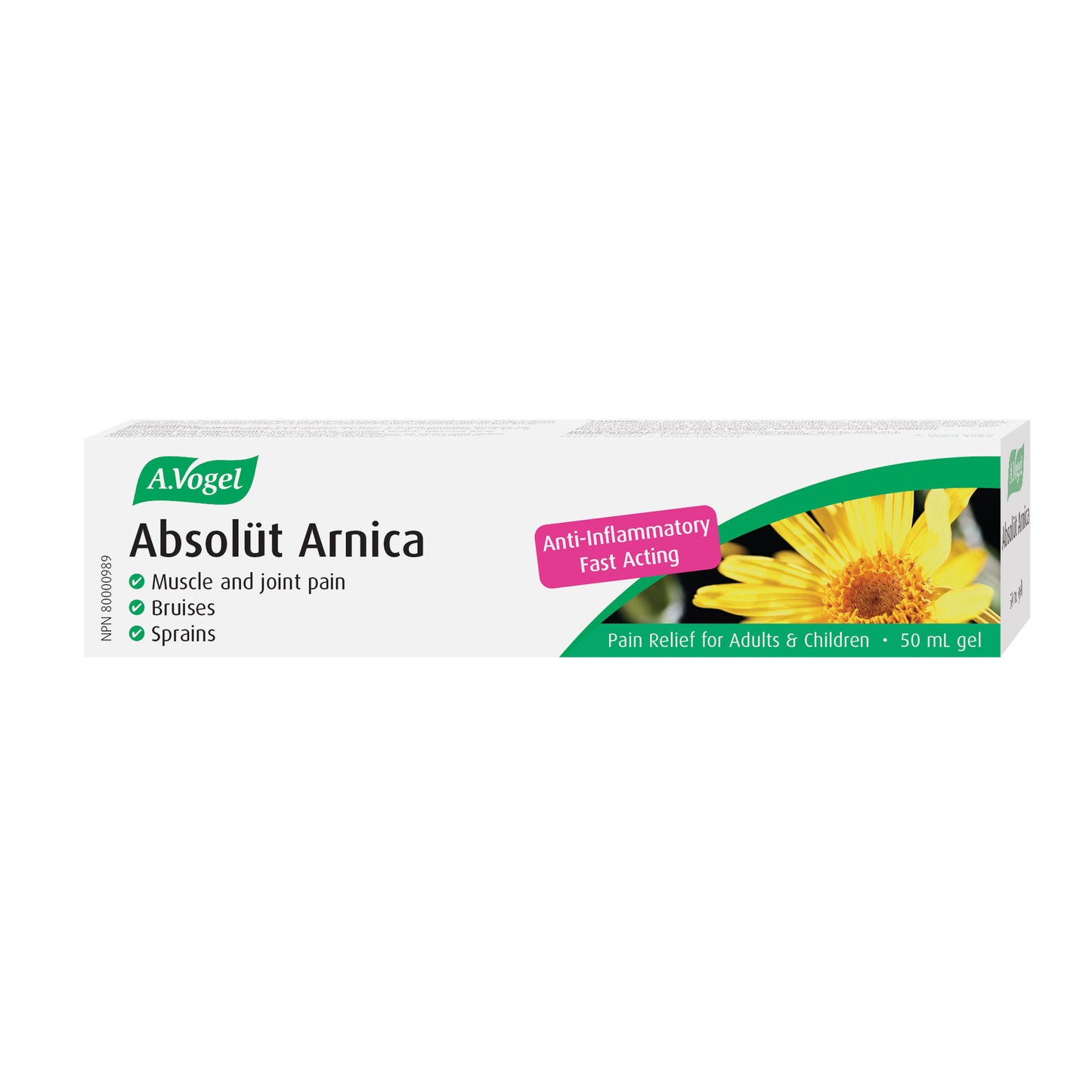
Choosing between NSAID and arnica for topical treatment of hand osteoarthritis in a randomised, double-blind study

Reto Widrig · Andy Suter · Reinhard Saller · Jörg Melzer
Rheumatol Int 2007
Abstract
The use of topical preparations for symptom relief is common in osteoarthritis. The effects of ibuprofen (5%) and arnica (50 g tincture/100 g, DER 1:20), as gel preparations in patients with radiologically confirmed and symptomatically active osteoarthritis of interphalangeal joints of hands, were evaluated in a randomised, double-blind study in 204 patients, to ascertain diVerences in pain relief and hand function after 21 days’ treatment.
Diagnosis was according to established criteria; primary endpoints were pain intensity and hand function; statistical design was as per current regulatory guidelines for testing topical preparations.
There were no differences between the two groups in pain and hand function improvements, or in any secondary end points evaluated.
Adverse events were reported by six patients (6.1%) on ibuprofen and by Wve patients (4.8%) on arnica. Our results confirm that this preparation of arnica is not inferior to ibuprofen when treating osteoarthritis of hands.

Skin Penetration Studies of Arnica Preparations and of their Sesquiterpene Lactones

Steffen Wagner - Andreas Suter - Irmgard Merfort
Planta Med 2004
Abstract
Alcoholic preparations of Amica montana are widely used for the topical treatment of various inflammatory diseases. Sesquiterpene lactones (SLs) are mainly responsible fOT their anti-inflammatory activity.
Here we have studied the penetration kinetics of Amica tinctures prepared from dried Amica flowers originating from different chemotypes as weIl as of their respective dominating SLs, helenalin isobutyrate and lla.13-dihydrohelenalin acetate. Same alcoholic preparations of fresh Amica flowers and an Amica fresh plant gel were also included in the study.
We used the stripping method with adhesive tape and pig skin as a model and determined the quantity of SLs in the stripped layers of the stratum comeum (SC). Thus, we observed the penetration into and permeation through this uppermost part of the skin. Whereas isolated SLs permeate through the SC only in a very small amount, permeation of SLs was much higher when they were present in the tinctures.
Furthermore, differences of permeation were observed between helenalin and dihydrohelenalinderivatives. Permeation through the SC could be determined forthe tested Amica preparations of fresh Amica flowers with two preparations showing the best penetration behaviour of all thetested substances.
Moreover, the effects of incubation time as well as of repeated applications were investigated with one preparation.
Altogether, this study shows that a sufficient amount ofSLs might permeate the skin barrier by using Amica preparations to exert anti-inflammatory effects and that the topical use of plant preparations may be advantageous compared to the isolatedcompounds.

Monograph Arnica

montanaBioforce AG, 2004

Arnica montana Gel in Osteoarthritis of the Knee: An Open, Multicenter Clinical Trial

Otto Knuesel, Michel Weber, Andy Suter
Advances In Therapy 2002
Abstract
This open multicenter trial investigated the safety and efficacy of an Arnica montana fresh plant gel, applied-twice daily, in 26 men and 53 warnen with mild to moderate osteoarthritis (OA) of the knee.
After 3 and 6 weeks, significant decreases in median total scores on the Western Ontario and McMaster Universities Osteoarthritis Index (WO MAC) were evident in the intention-to-treat and per-protocol populations (both P<.OOOl). Scores on the pain, stiffness, and function subscales also showed significant reductions at these timepoints. The overall local adverse-event rate of 7.6% includecl only one allergic reaction. Sixty-nine patients (87%) rated the tolerability of the gel as "good" or "fairly good," and 76% would use it again.
Topicall application of Arnica montana gel for 6 weeks was a safe, well-tolerated, and effective treatment of mild to moderate OA of the knee.