
Breaking News: Clinical Insights on the Nimbus Variant
Share
The new NB.1.8.1 SARS-CoV-2 variant was dubbed Nimbus and is gaining prevalence globally. This has prompted renewed attention from clinicians and public health authorities. Its nickname has led to countless memes and references to the famous broomstick in Harry Potter, but this variant is making headlines for its “razor blade” sore throats.
A Recombinant Variant. With Enhanced ACE2 Binding
Nimbus is a recombinant Omicron-lineage variant, descended from XDV (a hybrid of JN.1 and XDE)
- Contains seven spike protein mutations plus 20 additional alterations to its genome
- Its spike structure demonstrates enhanced binding affinity to ACE2 receptor
- Allows for increased cell entry and infectivity
- In vitro data suggest its infectivity may be 2.5x higher than LP.8.1, the current variant under monitoring by the WHO and Global Centre for Health Security
Clinical Presentation
Symptomatically, Nimbus mirrors other descendants of the omicron line:
- Low-grade fever
- Congestion
- Exhaustion
The distinguishing feature is pronounced oropharyngeal inflammation. Clinicians across Europe and Asia, where the variant is more prominent, report a disproportionately high frequency of severe pharyngodynia. This has often been described as a feeling of “glass shards” or “razor blades” in the throat.
Integrative Therapeutic Considerations: Echinaforce®
The standardized extract of Echinacea purpurea used in A.Vogel’s Echinaforce® has demonstrated:
- In vitro virucidal activity against SARS-CoV-2 and HCoV-229E
- 99% viral load reduction and 63% decreased risk of infection in human clinical studies
- Enhanced production of key cytokines (IFN-γ, IL-10, MCP-1), suggesting support for innate and adaptive immune function, particularly in vulnerable populations
Moreover, a 2021 randomized controlled trial indicated a reduction in time-to-recovery by nearly 5 days in individuals with symptomatic SARS-CoV-2.
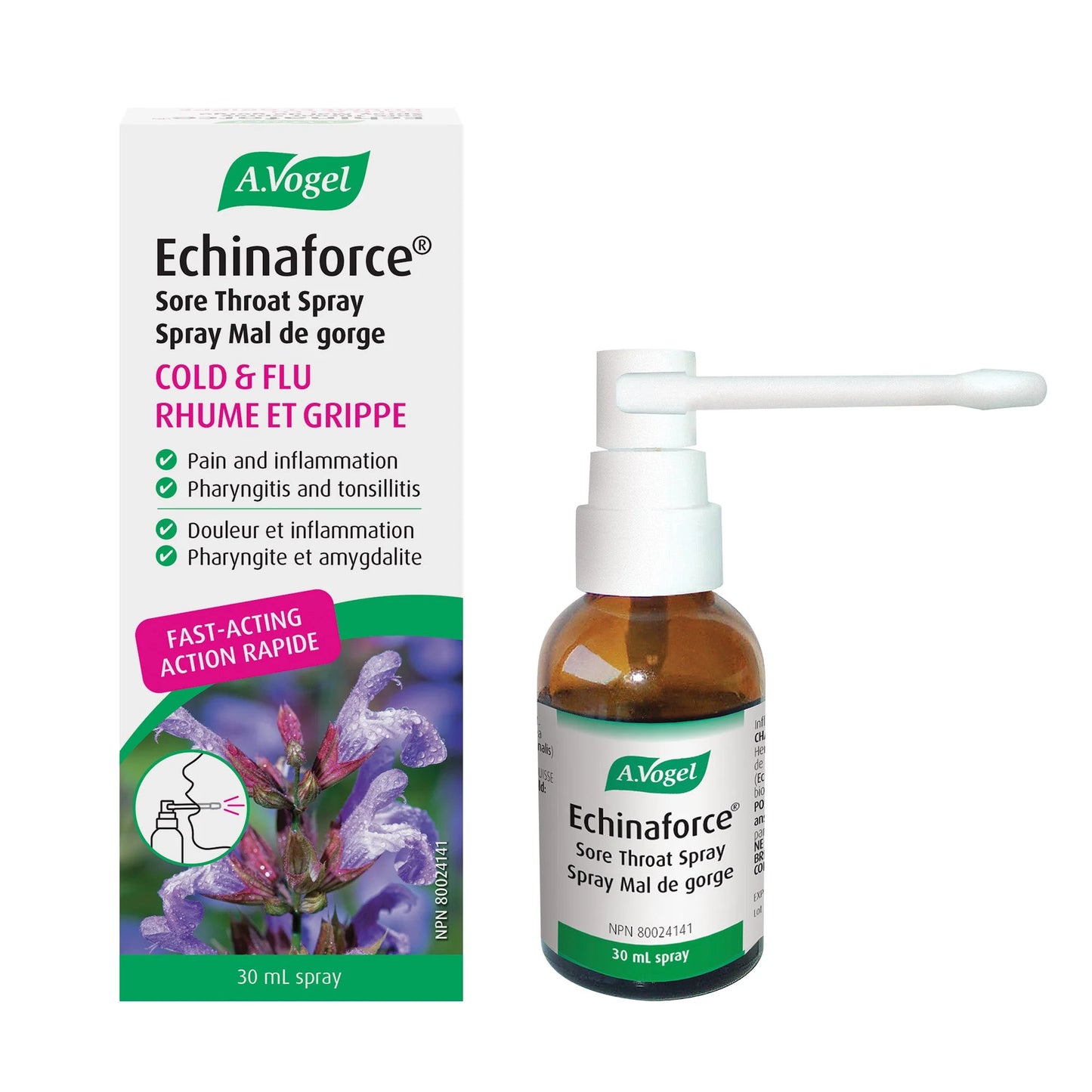
Sore Throat Spray: Rapid Symptom Relief
For acute pharyngitis as seen with Nimbus, the Sore Throat Spray combines Echinacea and Salvia officinalis:
- Demonstrated non-inferiority to chlorhexidine/lidocaine in multicenter RCTs, with >50% symptom resolution by Day 3.
Recommendations for Frontline Providers
- Differential Diagnosis: Consider COVID-19 in patients with severe sore throat and minimal nasal symptoms; rule out strep and mononucleosis where clinically indicated.
- Supportive Management: Employ pharmaceutical-grade phytotherapeutic agents like Echinaforce® and Sore Throat Spray as frontline non-antibiotic options in viral pharyngitis.
- Patient Education: Reinforce continued relevance of COVID-19 variants and the role of immune preparedness, even in the context of a less severe public health risk.